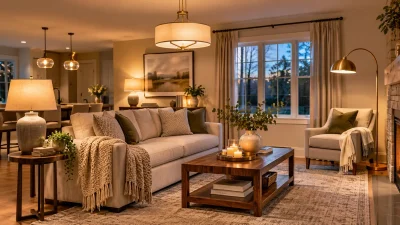
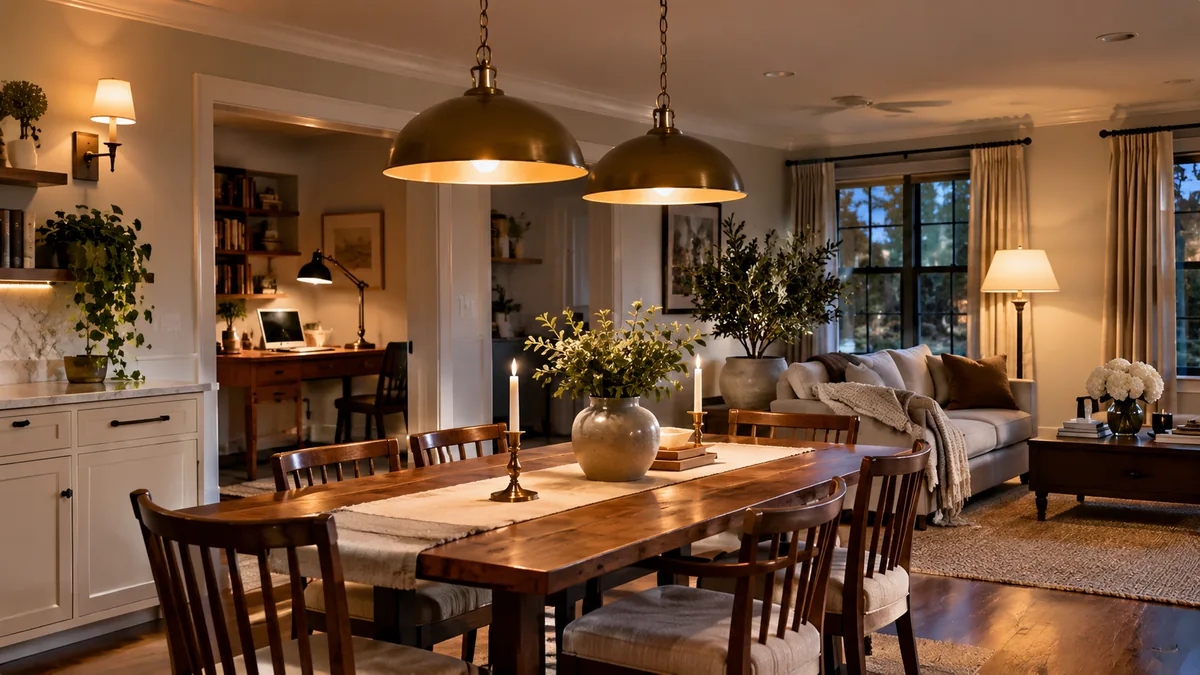
During weekdays, the household lights facilitate the fast preparation of breakfast meals and help with doing schoolwork at the dining table. These activities require bright lighting that reveals all the details. On the weekends, these spaces are used for late breakfasts or movie nights with dimmer lights.
When rooms change uses from day to day, fixtures with classic shapes and contemporary lines fill the space. The Thomas O’Brien designer lighting collection at Visual Comfort is one such example of such a range. The lighting plan for each part of the week is demonstrated in the following sections.
Map How Each Room Gets Used through the Week
A good light plan starts with a list of what each room does from Monday to Sunday. A kitchen may serve quick weekday breakfasts as well as long weekend brunches.
A spare room may act as an office on Tuesday plus a guest room on Saturday. The family room may hold homework on school nights. On weekends, it may turn into a spot for movies or games. A short list of these roles shows where light needs to flex.
Light Needs That Change across the Week
● Early weekday hours call for bright light over the kitchen counter.
● A home desk needs a focused task lamp aimed at the work surface.
● Homework at the table goes smoother under even light with few shadows.
● Weekend brunch suits a softer glow over the table.
● Guests at night feel at ease with warm light from lamps or sconces.
● Movie nights need low light placed behind the TV to keep glare off the screen.
Layers Let One Room Serve Two Schedules
Layered light uses three kinds of light in one room so each task gets the right amount. Overhead light or a chandelier’s overall light output is called ambient light. Task light is provided from a desk lamp or pendant light for tasks such as bills.
Accent light from sconces adds a soft glow to walls or art. On weekdays, the ambient plus task layers handle the bulk of the work. On weekends, the accent layer with a few lamps can carry the room.
Dimmers Give One Fixture Two Moods
The dimmer allows a single lamp to go from intense lighting to less intense light. This control is apt for the table that sees fast Tuesday lunch and slow Saturday dinner. LED bulbs are good to use with a dimmer provided they are described as dimmable on the bulb packaging.
Such lights are widespread since about 47% of homes in America used LEDs for lighting up indoors, according to a 2020 national Residential Energy Consumption Survey. About 10 million houses were found to be using smart speakers to control lights in a 2020 survey.
Bulb Quality Shapes How Rooms Look
The bulb in a lighting fixture determines how the food or cloth appears in the room. Color rendering index is a scale with a maximum of 100 and indicates the accuracy of true colors with the use of a particular bulb.
If you have a bulb with a CRI of 90 or higher, you are assured that your weekday kitchen preparation will be accurately represented on the countertop. The same bulb shows art or wood in true tones when weekend guests visit. Many bulb boxes list the CRI next to lumens, which measure total light output. A check of these two numbers helps one bulb serve the whole week.
Pick Fixtures with a Look That Lasts All Week
Chandeliers and sconces can be seen in one’s house all through the week and hence should have designs that are fitting for both busy and non-busy days. Designs that are elegant and traditional will work equally well on formal dinner parties as well as brunch.
The designer range that combines ancient and contemporary design is suitable for such needs. The Thomas O’Brien designer lighting range by Visual Comfort is one of them. Brass metallic finishes that will work well in both high and dim lighting conditions. One style across the main rooms helps the home feel pulled together.
Plan the Main Rooms for Two Rhythms
In the kitchen, pendant lights above the counter area take care of meal preparation during weekdays. After that, under-counter lights offer a gentle illumination for an evening snack during weekends.
In the living room, a floor lamp near the couch takes care of homework time, while on weekends, the room may use table lamps when the overhead lights are off. In bedrooms, overhead lights are needed to brighten up dressing during weekdays, along with bedside lights for Sunday mornings. A home office task lamp can sit on a timer that shuts off on Friday night.
Creating a comfortable home also involves managing natural light, ventilation, and indoor conditions. For example, understanding how to stop condensation on bedroom windows can help homeowners maintain a more comfortable living environment throughout the year.
The main challenge is that one fixed light level rarely fits the whole week. Layers of ambient light with task or accent light give each room several levels. Dimmers with dimmable LED bulbs then shift a single fixture from work mode to rest mode. Fixtures with classic lines keep the look steady. The result is a home that feels ready for a busy Tuesday as well as a slow Saturday.

I am Ethan Miles, a digital creator and caption enthusiast who loves turning simple moments into powerful words. I specialize in crafting creative, trendy, and engaging captions that help your posts stand out. At Captionestry, I focus on delivering fresh ideas, relatable expressions, and scroll-stopping content for every mood and moment. I’m passionate about social media culture, photography, and the art of storytelling through short, impactful lines.