Have you ever heard someone say “that’s cap” or “no cap” and wondered what they were talking about? Perhaps you saw a comment saying “stop the cap” and felt completely lost. The cap meaning slang has become one of the most popular expressions in modern internet vocabulary, but its meaning and origins are fascinating.
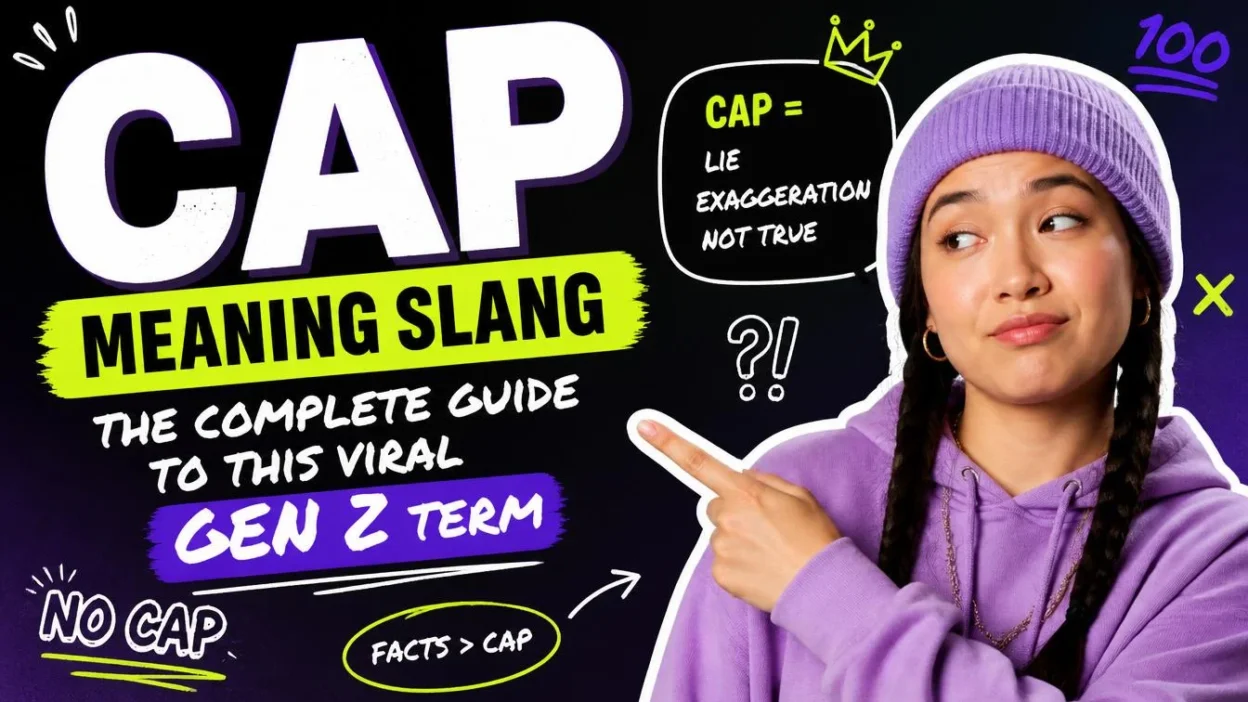
The cap meaning slang is simply a substitute for “lie” or “falsehood” . When someone says “that’s cap,” they are calling out a statement as untrue or exaggerated. On the flip side, “no cap” means “no lie” or “for real,” used to emphasize honesty .
This term has deep roots in African American Vernacular English (AAVE) and hip-hop culture . It gained mainstream popularity through Atlanta rappers in the late 2010s, particularly after the 2017 Migos song “Deadz” where Quavo rapped “No for real, no cap” .
This comprehensive guide will explore everything you need to know about the cap meaning slang. We will break down its primary definitions, trace its journey from “high capping” in the 1980s to its modern usage, and provide clear examples to help you use it correctly.
What is the Cap Meaning Slang? The Core Definition
The cap meaning slang has a clear primary definition, but it also carries a few nuances depending on the context.
The Primary Definition: A Lie or Falsehood
At its core, the cap meaning slang refers to a lie, falsehood, or exaggeration . When someone says “that’s cap,” they are calling out a statement as untrue or overhyped. It is a fast, blunt way to shut down someone who is bragging, fronting, or overselling themselves .
Key aspects of this definition include:
- Falsehood: The statement is not true
- Exaggeration: The truth has been stretched beyond reality
- Bragging: Someone is talking bigger than the facts support
Examples of this usage:
- “He said he’s a millionaire, but that’s obviously cap”
- “You did not finish that whole project in one night, stop the cap”
- “I met him once and now he says we’re best friends. Cap”
No Cap: The Honest Counterpart
“No cap” is the direct opposite of the cap meaning slang. It means “no lie” or “for real,” used to emphasize that someone is being completely truthful . Think of it as adding an exclamation point to a promise, hot take, or bold claim .
Examples of this usage:
- “No cap, that was the best concert I’ve been to all year”
- “No cap, I studied for five hours straight”
- “I originally bought it for $2000 but I’ll sell it to you for half that, no cap”
Stop the Cap: A Callout Phrase
“Stop the cap” is another variation used to tell someone to stop lying or exaggerating . It is a direct challenge to someone who is making false claims.
The Origins of Cap Slang
The cap meaning slang has a rich history that stretches back decades before it went viral on TikTok.
Roots in African American Vernacular English (AAVE)
The term “cap” originated in African American Vernacular English (AAVE) and has been used in hip-hop and street culture for decades . As early as the 1900s, “to cap” meant to brag, exaggerate, or lie about something .
The 1980s: “High Capping”
The history of “cap” starts with the expression “high capping,” meaning “exaggerating your status, pretending to have more than you have” . This phrase first appeared in pop culture in the 1989 song by Willie D, with the lyrics: “Put up the motherfucking steel and chill before that high-cappin’ shit get you killed” .
The 1940s Connection: “To Surpass”
Some linguists trace the term back even further. In the 1940s, “to cap” meant “to surpass” or “to top,” often in the context of boasting or exaggeration . Over time, this evolved into meaning “to lie” or “to exaggerate” .
The 2017 Breakthrough
The cap meaning slang gained widespread popularity through hip-hop music, particularly from Atlanta rappers . The 2017 Migos song “Deadz” featured the line “No for real, no cap,” and the term started appearing in multiple songs by Atlanta rappers .
Spread Through Social Media
From 2017 onward, the term spread rapidly on social media platforms like Twitter and TikTok . By 2026, it had become a core part of Gen Z and internet language .
How to Use Cap Slang Correctly
Now that you understand the cap meaning slang, here is a practical guide to using it properly.
The Dos
- Use it to call out lies: “He said he can run a 4-minute mile. Cap”
- Use it to emphasize honesty: “That was the best pizza I’ve ever had, no cap”
- Use it in casual settings: Texts, comments, group chats, and social media are perfect for this term
- Use it as a quick reaction: It works well as a one-word shutdown after a wild brag
The Don’ts
- Avoid using it in professional settings: In work emails or formal contexts, this term will sound out of place
- Avoid overusing it: Like all slang, it loses impact with overuse
- Avoid using it in a stiff way: “Per my observations, that statement is cap in nature” sounds forced
Example Sentences
- Calling out a lie: “You met Drake? That’s cap”
- Emphasizing truth: “I didn’t cheat, no cap!”
- Stop lying: “Stop the cap, you weren’t even there”
- Reacting to exaggeration: “He said he can run a 4-minute mile—major cap”
Frequently Asked Questions
What does cap mean in slang?
The cap meaning slang means a lie, falsehood, or exaggeration. “That’s cap” means “that’s a lie” .
What does no cap mean?
“No cap” means “no lie” or “for real.” It is used to emphasize that someone is being completely truthful .
Where did the cap slang come from?
It originated in African American Vernacular English (AAVE) and hip-hop culture. The phrase “high capping” appeared in 1989, and the term gained mainstream popularity through Atlanta rappers in 2017 .
Is cap still used in 2026?
Yes! Cap is still very much alive and common in social media, gaming chat, and everyday casual conversation. It does not feel outdated .
Is cap offensive?
Generally not. The cap meaning slang is a casual term used to call out lies or exaggeration. However, context matters, so use it appropriately based on your audience and setting .
Conclusion
The cap meaning slang represents one of the most successful linguistic exports from hip-hop culture to mainstream internet vocabulary. What started as “high capping” in 1980s rap songs has become a core part of Gen Z language, used by millions across TikTok, Instagram, and everyday conversation.
Understanding the cap meaning slang is essential for navigating modern internet culture. Whether you are calling out a friend who is exaggerating or emphasizing your own honesty with “no cap,” this term is quick, expressive, and versatile.
The term’s journey from AAVE to mainstream popularity is also a reminder of how language evolves and how it is shaped by the communities that create it . The next time you hear someone say “that’s cap,” you will know exactly what they mean—and you will understand the rich cultural history behind this simple three-letter word.

I am Ethan Miles, a digital creator and caption enthusiast who loves turning simple moments into powerful words. I specialize in crafting creative, trendy, and engaging captions that help your posts stand out. At Captionestry, I focus on delivering fresh ideas, relatable expressions, and scroll-stopping content for every mood and moment. I’m passionate about social media culture, photography, and the art of storytelling through short, impactful lines.