
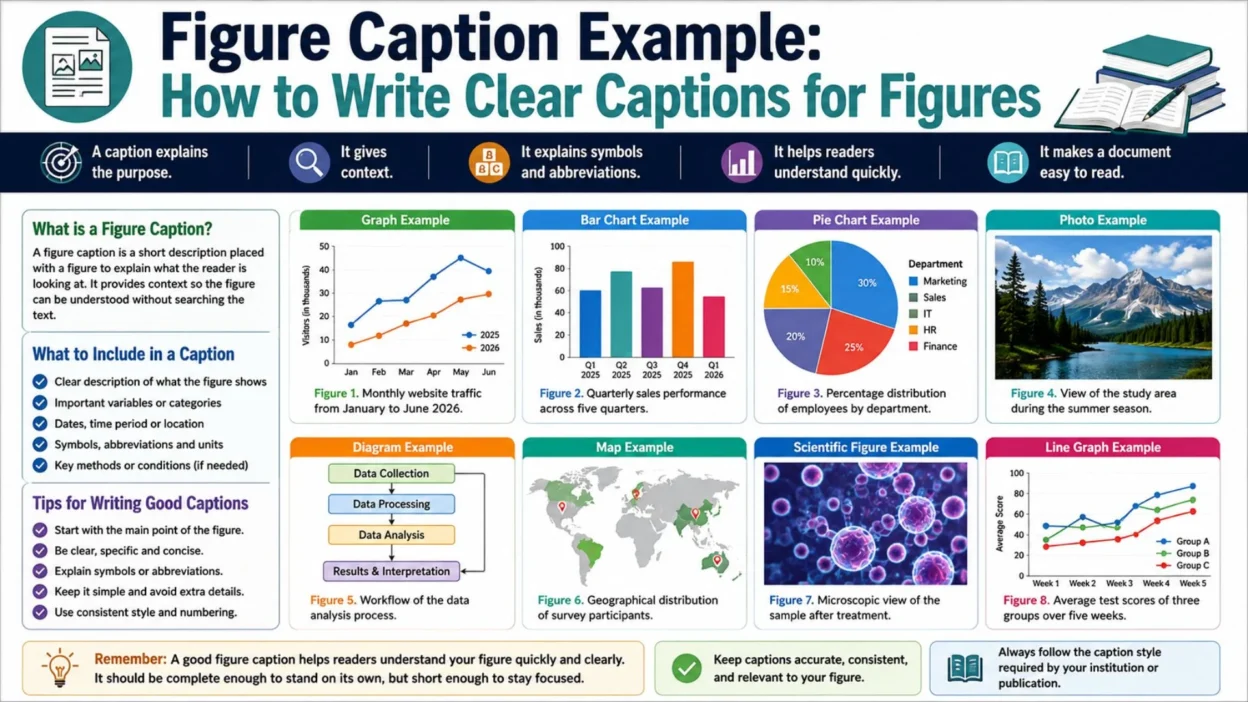
A figure caption may describe a graph, photograph, diagram, chart, map, illustration, or scientific image. The exact format depends on the type of document and the style guide being followed.
A useful caption should be clear, specific, and easy to understand. It should also provide enough context for the reader to interpret the figure correctly.
In this guide, you will find practical figure caption examples for research papers, reports, presentations, dissertations, scientific studies, and general academic writing. You will also learn what to include, what to avoid, and how to format captions properly.
What Is a Figure Caption?
A figure caption is a short piece of text placed with a figure to explain what the reader is looking at.
The caption usually identifies the subject of the figure and may add important details about data, methods, symbols, locations, or conditions.
A good caption should work with the figure rather than simply repeat information already visible in it.
Why Are Figure Captions Important?
A figure may contain a lot of visual information, but readers still need context.
For example, a line graph can show several trends without explaining what the lines represent. A clear caption helps readers understand the subject before they study the details.
Captions also make academic documents easier to scan. A reader can often understand the purpose of a figure by reading its caption first.
In research writing, this is especially useful because figures often support important findings or explanations.
What Should a Figure Caption Include?
The exact content depends on the figure, but several elements are commonly useful.
A caption may include a short description, the variables shown, the population or sample, the location, the time period, or other details needed for interpretation.
Simple Figure Caption Examples
A simple figure caption does not need complicated wording.
The goal is to identify the figure and provide enough information for the reader to understand its purpose.
• Figure 1. Monthly website traffic from January to June 2026. 📈
• Figure 2. Diagram of the experimental setup used in the study. 🔬
• Figure 3. Location of the study area in southern Punjab. 🗺️
• Figure 4. Comparison of average temperatures across four months. 🌡️
• Figure 5. Photograph of the completed prototype. 📷
• Figure 6. Distribution of participants by age group. 👥
• Figure 7. Proposed workflow for the data analysis process. ⚙️
• Figure 8. Changes in plant height during the observation period. 🌱
Figure Caption Examples for Graphs
Graphs often require captions that explain the variables and the relationship being shown.
The caption does not need to describe every data point. Instead, it should give readers the context needed to interpret the graph.
• Figure 1. Relationship between study time and test scores among participants. 📈
• Figure 2. Average monthly sales recorded during the study period. 💹
• Figure 3. Changes in population size between 2018 and 2026. 📊
• Figure 4. Average response time across three experimental conditions. ⏱️
• Figure 5. Comparison of energy consumption before and after optimization. ⚡
• Figure 6. Relationship between temperature and reaction rate. 🌡️
• Figure 7. Weekly engagement levels recorded over a six-month period. 📅
• Figure 8. Distribution of measured values across the experimental groups. 🔬
Figure Caption Examples for Bar Charts
Bar charts usually compare categories, so the caption should make the comparison clear.
Mention the main categories or measurement when that information is useful.
• Figure 1. Average scores for students across five subject areas. 📊
• Figure 2. Number of survey responses by age group. 👥
• Figure 3. Annual revenue by product category. 💼
• Figure 4. Percentage of respondents selecting each answer option. 📋
• Figure 5. Average processing time for each software configuration. 💻
• Figure 6. Number of observations recorded at each study location. 📍
Figure Caption Examples for Line Graphs
Line graphs often show change over time.
A useful caption should identify the measured variable and, when relevant, the period covered.
• Figure 1. Daily temperature changes recorded during the study period. 🌡️
• Figure 2. Website visits recorded from January through June 2026. 📈
• Figure 3. Changes in battery performance over repeated charging cycles. 🔋
• Figure 4. Monthly rainfall levels recorded at the study site. 🌧️
• Figure 5. Changes in average response time during the experiment. ⏱️
Figure Caption Examples for Pie Charts
Pie charts show proportions or percentages.
The caption should make the subject of those proportions clear.
• Figure 1. Percentage distribution of participants by education level. 🎓
• Figure 2. Share of total expenses by budget category. 💰
• Figure 3. Distribution of respondents according to employment status. 👥
• Figure 4. Proportion of users selecting each service option. 📱
Figure Caption Examples for Photographs
Photographic figures may need captions that identify the subject, place, event, or condition shown.
Avoid describing obvious details unless they help explain the purpose of the photograph.
• Figure 1. Exterior view of the research facility. 🏢
• Figure 2. Experimental equipment arranged before data collection. 🔬
• Figure 3. Field site photographed during the sampling period. 🌿
• Figure 4. Prototype device during its final testing stage. ⚙️
• Figure 5. Sample preparation before laboratory analysis. 🧪
• Figure 6. Study area following the rainfall event. 🌧️
Figure Caption Examples for Diagrams
Diagrams usually explain a process, system, structure, or relationship.
The caption can identify the overall concept and clarify important parts.
• Figure 1. Conceptual model showing the relationship between the study variables. 🧩
• Figure 2. Workflow for collecting and processing survey data. 🔄
• Figure 3. Schematic representation of the proposed system. ⚙️
• Figure 4. Process used to prepare samples for analysis. 🧪
• Figure 5. Data flow between the main components of the system. 💻
• Figure 6. Structural relationship between the three main system components. 🏗️
Figure Caption Examples for Maps
Maps often need information about the location, boundaries, or features being highlighted.
A caption should help readers understand why the map appears in the document.
• Figure 1. Map showing the location of the study area. 🗺️
• Figure 2. Geographic distribution of survey participants across the selected districts. 📍
• Figure 3. Sampling locations within the research area. 🧭
• Figure 4. Land-use distribution across the study region. 🌍
• Figure 5. Map of the communities included in the field survey. 📌
Figure Caption Examples for Scientific Research
Scientific captions often need more detail than captions used for casual reports.
The reader should be able to understand the figure without guessing what the symbols, groups, or measurements mean.
• Figure 1. Mean growth rate of the three experimental groups during the observation period. 🌱
• Figure 2. Microscopic view of the sample after treatment. 🔬
• Figure 3. Experimental results under three temperature conditions. 🌡️
• Figure 4. Schematic representation of the proposed experimental method. 🧪
• Figure 5. Changes in measured concentration across the sampling period. 📉
Figure Caption Examples for Research Papers
Research papers usually benefit from concise but informative captions.
The caption should support the figure without turning into a second results section.
• Figure 1. Study design and participant selection process. 👥
• Figure 2. Distribution of observations across the study groups. 📊
• Figure 3. Comparison of measured outcomes between the control and experimental groups. 🔬
• Figure 4. Relationship between the primary variables included in the analysis. 📈
• Figure 5. Summary of the proposed research framework. 🧩
Figure Caption Examples for Thesis and Dissertation
Theses and dissertations often contain many figures, so consistency becomes especially important.
Use a similar structure and level of detail throughout the document.
• Figure 1. Overview of the research framework used in this study. 📚
• Figure 2. Conceptual model linking the main research variables. 🧠
• Figure 3. Participant recruitment and selection process. 👥
• Figure 4. Distribution of collected samples by study location. 📍
• Figure 5. Results of the statistical comparison between study groups. 📊
• Figure 6. Proposed model based on the findings of the study. 🧩
Figure Caption Examples for Reports
Reports often use a more direct writing style.
The caption should tell the reader what the visual represents and why it is relevant.
• Figure 1. Customer satisfaction results from the annual survey. 📋
• Figure 2. Monthly sales performance during the reporting period. 💼
• Figure 3. Project timeline and major implementation stages. 📅
• Figure 4. Distribution of operating costs by department. 💰
• Figure 5. Workflow used for processing customer requests. ⚙️
Figure Caption Examples for Presentations
Presentation captions should be short because slides already contain limited space.
Use simple wording that supports the visual instead of creating another large block of text.
• Figure 1. Growth in monthly website traffic. 📈
• Figure 2. Proposed project workflow. 🔄
• Figure 3. Survey results by age group. 👥
• Figure 4. Study locations across the selected region. 🗺️
• Figure 5. Comparison of the two tested approaches. ⚖️
How to Write a Good Figure Caption
A good caption starts with the main point.
Ask yourself what a reader needs to know before looking closely at the figure. Then include only the information that helps answer that question.
A useful caption can usually identify the subject, clarify important details, and provide context without becoming unnecessarily long.
Short Figure Caption Examples
Short captions are useful when the figure is simple and self-explanatory.
They should still provide enough context for readers who view the figure separately from the main text.
• Figure 1. Study area. 🗺️
• Figure 2. Research workflow. ⚙️
• Figure 3. Monthly sales trends. 📈
• Figure 4. Experimental setup. 🔬
• Figure 5. Participant distribution. 👥
• Figure 6. Proposed system model. 💻
• Figure 7. Sample preparation process. 🧪
Detailed Figure Caption Examples
Some figures need more explanation because they contain several variables, panels, symbols, or experimental conditions.
A longer caption can be useful when the reader needs extra context to interpret the figure correctly.
• Figure 1. Average response scores for the control and experimental groups across the three observation periods. Error bars represent the variation within each group. 📊
• Figure 2. Overview of the proposed workflow, showing the main stages used to collect, process, and analyze the study data. 🔄
• Figure 3. Distribution of sampling locations across the study region, with markers indicating the sites included in the final analysis. 🗺️
• Figure 4. Changes in measured temperature across the observation period under the three experimental conditions used in the study. 🌡️
How Long Should a Figure Caption Be?
There is no single ideal length for every figure.
A simple photograph may need only a short phrase. A complex scientific figure may need several sentences to explain variables, abbreviations, panels, or experimental conditions.
The key is usefulness. Do not make a caption longer simply to make it look more academic.
A caption is too short when readers cannot understand the figure without searching elsewhere. It is too long when it starts repeating the full discussion from the main text.
Figure Caption vs Figure Title
These terms are sometimes used interchangeably, but they can describe different parts of a figure label.
A figure title is often a short identifying phrase. A caption may include that title plus additional explanatory information.
For example, “Monthly Website Traffic” can act as a title, while “Figure 1. Monthly website traffic from January to June 2026” functions as a complete caption.
The exact terminology depends on the publication, institution, or style guide.
Where Should a Figure Caption Go?
In many academic styles, the caption appears directly below a figure.
However, formatting requirements can differ between universities, journals, publishers, and style guides.
Always check the specific instructions for your assignment or publication before finalizing the layout.
How to Number Figures
Figures are commonly numbered in the order in which they appear.
For example, the first figure may be Figure 1, followed by Figure 2 and Figure 3.
Some academic formats use chapter-based numbering, such as Figure 2.1 for the first figure in Chapter 2.
Follow the formatting rules required by your institution or publisher.
Common Figure Caption Mistakes
Weak captions often fail because they provide too little context or contain unnecessary information.
A few simple checks can improve the final result.
How to Make Captions More Accessible
Captions can help readers understand visual content, but they should not be the only accessibility feature.
Use clear language and explain important visual information in text when the information is essential to understanding the document.
Do not rely only on color to communicate meaning, especially in charts and diagrams.
Figure Caption Example Template
A simple template can make caption writing faster.
You can adapt the structure based on the type of figure and the requirements of your document.
• Figure X. [What the figure shows] + [important context]. 📝
• Figure X. [Main relationship] among [variables or groups]. 📊
• Figure X. [Process or system] showing [important stages or components]. ⚙️
• Figure X. [Location or distribution] across [study area or period]. 🗺️
• Figure X. [Experimental result] under [relevant conditions]. 🔬
Figure Caption Example for Academic Writing
A polished academic caption should be factual and direct.
Avoid emotional wording, promotional language, or conclusions that are not clearly supported by the figure.
• Figure 1. Average test scores for participants before and after the training program. 📚
• Figure 2. Relationship between study duration and reported test performance. 📈
• Figure 3. Conceptual framework showing the proposed relationships among the study variables. 🧩
• Figure 4. Distribution of survey responses across the five response categories. 📋
How to Reference a Figure in the Main Text
A figure caption is only one part of good figure presentation.
The main text should also tell readers when a figure is relevant. Use a clear reference such as “Figure 2 shows the change in…” rather than simply placing an unexplained image in the document.
The reference should match the figure number exactly.
For example, if the caption identifies the visual as Figure 3, the main text should also refer to Figure 3.
Frequently Asked Questions About Figure Caption Examples
What is a figure caption example?
A figure caption example is a sample description showing how to identify and explain a figure in an academic paper, report, thesis, presentation, or research document.
What should a figure caption include?
It should normally identify what the figure shows and provide any important context needed to understand it. Complex figures may also need definitions, units, symbols, or conditions.
Should a figure caption be above or below the figure?
The position depends on the required style. Many academic formats place captions below figures, but journal, university, and publisher guidelines can differ.
How long should a figure caption be?
There is no universal length. Simple figures may need only a short sentence, while complex research figures may require several sentences for proper explanation.
Should figure captions be complete sentences?
They can be complete sentences, sentence fragments, or concise descriptions depending on the style guide. Consistency is more important than using one format everywhere.
Do figure captions need figure numbers?
Most academic documents number figures so readers can easily refer to them in the main text. The exact numbering system depends on the required format.
What is the difference between a figure caption and a figure title?
A figure title usually identifies the subject briefly. A caption can include that identification plus additional information needed to understand the visual.
Can a figure caption include abbreviations?
Yes, but uncommon abbreviations should normally be explained. This helps readers understand the figure without searching through the document.
Should a figure caption explain the results?
It can provide necessary context, but it should not replace the main discussion. Detailed interpretation usually belongs in the surrounding text.
Can I copy a figure caption example directly?
You can use an example as a model, but your final caption should describe your actual figure accurately. Do not include details that your figure does not show.
Conclusion
A strong figure caption example should do more than label an image. It should give readers enough information to understand what the figure represents and how it connects to the surrounding discussion.
The best caption depends on the visual. A simple photograph may need only a brief description, while a scientific graph or research diagram may require variables, conditions, units, or explanations of symbols.
When writing your own caption, focus on clarity first. Identify the subject, add useful context, and remove information that does not help the reader. Then check your university, journal, publisher, or style guide for specific formatting requirements.
A consistent approach will make your paper, thesis, report, or presentation easier to read. It will also help readers understand your visual information without unnecessary effort.

I am Ethan Miles, a digital creator and caption enthusiast who loves turning simple moments into powerful words. I specialize in crafting creative, trendy, and engaging captions that help your posts stand out. At Captionestry, I focus on delivering fresh ideas, relatable expressions, and scroll-stopping content for every mood and moment. I’m passionate about social media culture, photography, and the art of storytelling through short, impactful lines.