
Key Takeaways
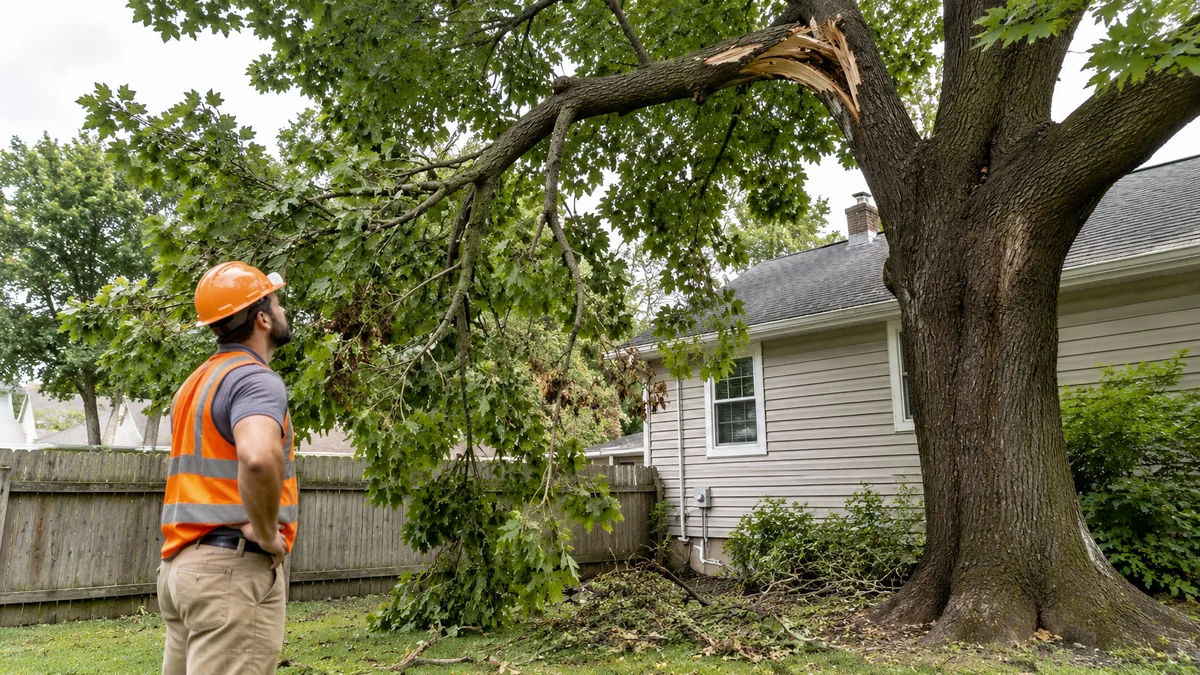
- New or worsening lean, cracks, cavities, exposed roots, and hanging limbs are reasons to seek a professional evaluation.
- Pruning can address deadwood, crowded branches, poor clearance, and some structural concerns.
- Removal may be necessary when a tree is dead, seriously damaged, unstable, or cannot be managed safely through pruning.
- Storm-damaged trees near utility lines should be treated as an electrical hazard and left alone until the utility provider and qualified professionals assess the situation.
- New Jersey Tree Professional provides tree removal, trimming, pruning, stump grinding, emergency service, and crane-assisted removal for difficult access situations.
Table of Contents
- Why Do Trees Require Special Attention in Union County, NJ?
- What Warning Signs Should Property Owners Watch For?
- When Can Pruning Solve a Tree Problem, and When Is Removal Safer?
- What Should You Do After a Storm Damages a Tree?
- What Happens During a New Jersey Tree Professional Service Request?
- Frequently Asked Questions
From compact residential lots in Union and Roselle to tree-lined streets in Cranford, Rahway, Linden, and Elizabeth, Union County, NJ, property owners often have mature trees growing close to homes, garages, sidewalks, fences, and parked vehicles. A healthy tree can add shade and character to a property, but deadwood, structural defects, root damage, and storm-related failures can quickly create a safety concern. New Jersey Tree Professional helps homeowners, landlords, and property managers evaluate tree concerns and choose an appropriate path forward.
Not every overgrown or damaged tree needs to be removed. In many cases, careful trimming, deadwood removal, or structural pruning can improve clearance and reduce risk while preserving a valuable tree. When a tree is dead, severely decayed, unstable, or positioned where failure could strike a structure or public access area, removal may be the safer option.
Why Do Trees Require Special Attention in Union County, NJ?
In developed neighborhoods, the location of a tree can matter just as much as its size. A moderate-sized tree with weak limbs above a driveway may pose a more immediate concern than a larger tree growing away from buildings and pedestrian areas. Limited yard access, nearby homes, pavement, fences, and overhead infrastructure can also make routine maintenance or removal more technically involved.
Union County’s landscape adds its own pressures. Many lots sit on relatively compact parcels shaped by decades of residential development, and older streets were often planted with species chosen for appearance rather than for the root space and overhead clearance those trees now need. Soil conditions can shift from one block to the next, and heavy rain can leave ground saturated for days, reducing a root system’s ability to anchor a tree during a windstorm. Properties near the Rahway River and other low-lying corridors may also see more frequent saturation during intense rain events, which is worth considering when evaluating a tree’s stability.
When you are uncertain whether a tree is declining, structurally weak, or simply overdue for maintenance, speaking with a certified arborist in Union County can help turn a vague concern into a clear plan. A professional assessment considers the tree’s condition, visible defects, location, targets beneath it, and practical options for preserving or removing it.
What Warning Signs Should Property Owners Watch For?
Tree problems are not always obvious from a distance. Some risks develop slowly, while others become noticeable after a period of heavy rain, wind, snow, or ice. Property owners should arrange an assessment when they see changes such as:
- A new lean or a lean that appears to be getting worse.
- Cracks in the trunk, a major limb, or the connection between two stems.
- Large dead branches above a roof, driveway, patio, walkway, or neighboring property.
- Hollow areas, cavities, mushrooms near the base, or other visible signs of decay.
- Raised soil, broken roots, or a shifted root area after a storm.
- Branches rubbing against a roof, siding, gutters, windows, or utility lines.
- A split limb that remains attached and could fall unexpectedly.
- A stump that blocks landscaping plans, mowing, drainage work, or access.
Do not climb a compromised tree, cut limbs above shoulder height without appropriate training and equipment, or attempt work near power lines. Keeping people and pets out of the affected area is the prudent first step while the hazard is evaluated.
When Can Pruning Solve a Tree Problem, and When Is Removal Safer?
Pruning is often a practical solution when a tree is generally healthy but has deadwood, crowded branches, poor weight distribution, or limbs extending too close to a structure. The goal is not simply to make a canopy smaller. Thoughtful pruning can improve clearance, remove damaged material, and support a more balanced structure without unnecessary cuts.
The factors that influence wind and ice damage include tree form, condition, species characteristics, pruning history, and storm conditions. That is why a one-size-fits-all approach is not appropriate for trees in Union County yards. A tree near a roof or driveway deserves a different level of attention than one located well away from people and property.
Removal may be recommended when a tree is dead, severely decayed, structurally compromised, badly damaged by weather, or situated where a failure could cause substantial harm. In tight spaces, the work may require specialized planning and equipment. New Jersey Tree Professional lists crane-assisted removal among its options for large or hard-to-reach trees, allowing crews to address complex removals with greater control.
What Should You Do After a Storm Damages a Tree?
Storm response begins with safety, not cleanup. If a tree or branch has fallen near a power line, assume it could be energized. Stay away, keep others clear, and contact the utility provider or emergency services as appropriate. Do not touch the tree, a fence, standing water, or nearby objects that could be in contact with a line.
For damage away from electrical infrastructure, document the condition from a safe distance and note whether the tree is on a roof, blocking a driveway, leaning toward a building, or creating a hazard over a sidewalk. Emergency tree service can focus first on stabilizing or removing the immediate danger, then on clearing debris and discussing any remaining stump work.
Neighborhoods across the county share a common pattern: mature shade trees along narrow streets, overhead service drops, and driveways tucked close to property lines. After a nor’easter or summer thunderstorm, a tree that looks intact from the sidewalk may have cracks or loosened roots that only become apparent on closer inspection. Scheduling a follow-up look a few weeks after the storm can catch problems that were not visible during the first hours of cleanup.
Research on urban forestry storm assessment emphasizes recording tree condition, size, risk factors, and damage type consistently. For property owners, the useful takeaway is straightforward: decisions are safer when they are based on an on-site evaluation rather than a quick visual guess after a storm.
What Happens During a New Jersey Tree Professional Service Request?
A productive service request starts with clear information. Explain where the tree is located, what changes you have noticed, whether there is recent storm damage, and what sits below or beside the tree. An on-site review can then determine whether trimming, pruning, removal, stump grinding, or emergency work best fits the circumstances.
Local scheduling also matters. Property owners in Union County often need work coordinated around school zones, parking restrictions on residential streets, and access through narrow driveways or rear yards. Mentioning these conditions during the initial call helps the crew plan equipment placement, traffic control, and debris handling before the workday begins, reducing surprises for both the property and the neighbors.
New Jersey Tree Professional describes a process that includes requesting a quote, meeting with an arborist, reviewing a written proposal, and scheduling approved work. Asking questions before work begins is useful. Confirm what will be removed, how nearby landscaping and structures will be protected, whether cleanup is included, and whether local permitting requirements may apply to the property.
For local assistance, contact New Jersey Tree Professional at 846 Liberty Ave, Union, NJ 07083 (view on Google Maps), or call (908) 866-8894 to request a free estimate. The company serves Union County communities including Union, Elizabeth, Linden, Roselle, Roselle Park, Rahway, and Cranford.
LOCATION: New Jersey Tree Professional | 846 Liberty Ave, Union, NJ 07083 | (908) 866-8894 | https://njtreeprofessional.com/
Frequently Asked Questions
How do I know whether a tree needs trimming or removal?
A healthy tree with overgrown, dead, or poorly placed branches may be a candidate for pruning. A dead, unstable, severely decayed, or structurally compromised tree may require removal. An on-site evaluation is the safest way to distinguish between the two.
How long does a tree assessment usually take?
Many on-site evaluations for residential properties can be completed in a single visit, though larger or more complex properties may require additional time. A written proposal typically follows so you can review the recommended work before anything is scheduled.
Can a stump be removed after a tree is cut down?
Yes. Stump grinding can reduce the stump below ground level so the area can be reused for lawn, landscaping, or other property improvements.
What if a branch is touching a power line?
Do not try to cut or move it. Contact the utility provider and keep people away from the area. Tree work around electrical lines requires specific safety planning.

I am Ethan Miles, a digital creator and caption enthusiast who loves turning simple moments into powerful words. I specialize in crafting creative, trendy, and engaging captions that help your posts stand out. At Captionestry, I focus on delivering fresh ideas, relatable expressions, and scroll-stopping content for every mood and moment. I’m passionate about social media culture, photography, and the art of storytelling through short, impactful lines.