
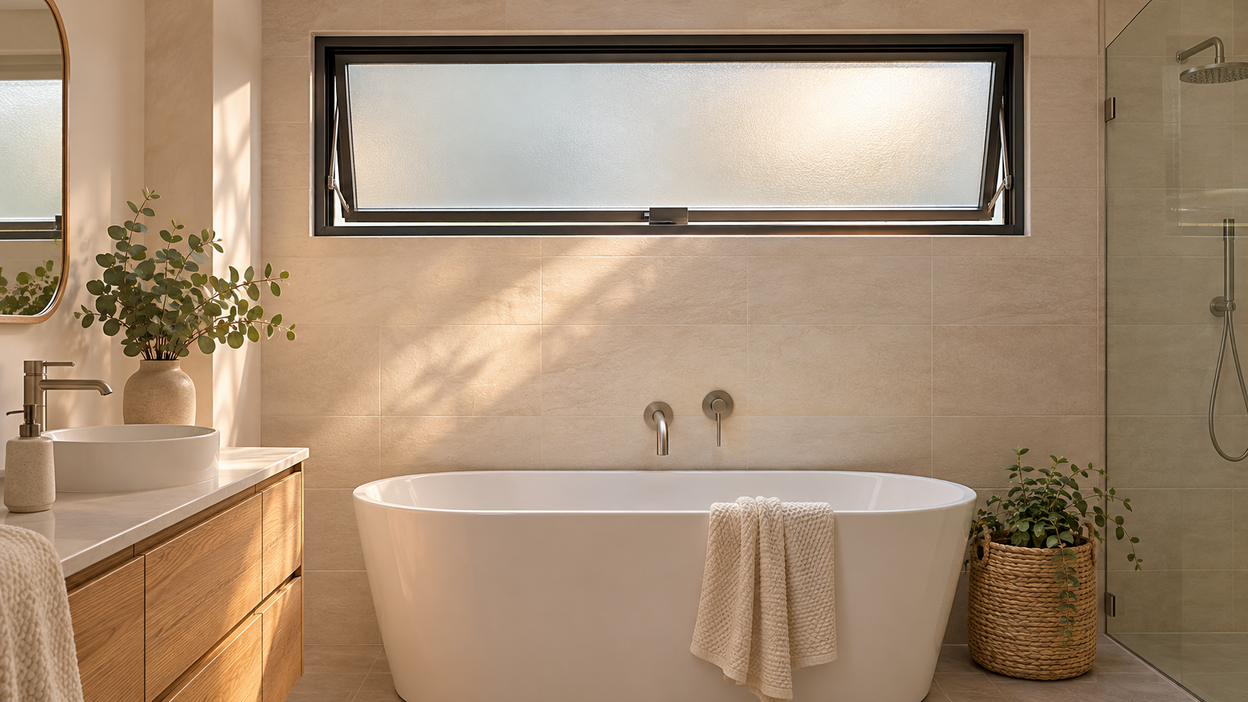
Bathroom windows do more than brighten a room. They affect ventilation, privacy, comfort, and even the placement of fixtures. When planning a new bathroom, the window deserves attention early in the design process rather than becoming an afterthought. A thoughtfully positioned window can make a compact bathroom feel more spacious, while a poorly chosen one may create privacy concerns, limit wall space, or interfere with everyday activities.
Consider How Natural Light Changes the Space
Natural light can dramatically influence how a bathroom looks and feels throughout the day. A window near the vanity may provide useful illumination for morning routines, while one positioned above a bathtub can create a brighter, more relaxing atmosphere. However, the window’s orientation matters as much as its size. Strong afternoon sunlight may cause unwanted glare or heat, particularly in bathrooms with large areas of reflective tile.
Before selecting a window, consider the existing layout and where natural light would be most useful. A narrow opening above the shower might brighten an otherwise dark corner, while a taller window could suit a bathroom overlooking a private garden. Moving or enlarging an existing opening may require additional construction, so the benefits should be weighed against the cost and complexity of modifying the wall.
Find a Window Style That Suits Your Routine
Different window styles offer distinct advantages, especially in rooms where space is limited. Awning windows open outward from the bottom and can be installed higher on the wall to preserve privacy. Casement windows provide generous ventilation, while sliding windows can work well where a straightforward opening mechanism is preferred. Fixed windows are another possibility when natural light matters more than airflow, provided the room has adequate ventilation.
The choice also depends on how clearly an installer explains the available options. Window contractors must communicate practical differences between products, an important consideration reflected in the window revenue labs website approach to marketing window and door installation services. Clear descriptions help customers understand what they are purchasing rather than relying entirely on photographs. For a bathroom renovation, that means asking how each window operates, how easily it can be cleaned, and whether its opening mechanism will remain accessible after installation.
Protect Privacy Without Blocking Daylight
Bathroom privacy becomes particularly important when windows face neighboring homes, sidewalks, or shared outdoor areas. Fortunately, maintaining privacy does not necessarily mean covering the glass with heavy curtains or blinds. Frosted, textured, and obscured glazing can allow daylight into the room while limiting visibility from outside. These options are especially useful near showers and bathtubs, where conventional fabric window treatments may be impractical.
Window placement provides another layer of privacy. Installing a window higher on the wall can reduce direct sightlines without noticeably restricting natural light. However, privacy glass should be evaluated under different lighting conditions. Some finishes that appear sufficiently private during daylight may reveal silhouettes when the bathroom is illuminated at night. Testing samples or discussing their performance with the installer can prevent disappointment.
Choose Materials That Can Handle Bathroom Humidity
Bathrooms expose windows to frequent temperature changes, condensation, and moisture. Materials that perform well in a dry bedroom may require additional care when installed close to a shower or bathtub. Vinyl and fiberglass frames are commonly considered because they resist moisture-related deterioration, while wood frames generally require appropriate finishes and ongoing maintenance to protect exposed surfaces.
Installation quality is equally important. Proper flashing, sealing, and waterproofing around the opening help keep water from reaching the surrounding wall structure. Even a moisture-resistant window cannot compensate for poorly installed joints or damaged seals. An operable window can help release humid air, but it should supplement rather than replace an adequately sized bathroom exhaust fan. Consistent ventilation is essential for controlling moisture after bathing.
Coordinate the Window With Other Bathroom Features
A bathroom window should complement the entire layout rather than compete with it. Consider how its frame color, shape, and surrounding trim relate to the tile, cabinetry, and fixtures. A slim-framed window may suit a contemporary interior, while a more traditional profile might work better alongside classic cabinetry and decorative finishes. Consistency matters more than following a particular design trend.
Practical details also influence placement. A window located behind a vanity mirror could create awkward reflections or reduce usable wall space. One positioned directly inside a shower requires especially careful attention to waterproofing and applicable safety-glazing requirements. If a window is difficult to reach, its opening mechanism may become inconvenient. These considerations are easier to address before construction begins than after the plumbing and finishes are installed.
Evaluate the Full Cost Before Making a Decision
The purchase price of a bathroom window represents only part of the investment. Installation expenses can increase when a project involves changing the opening size, repairing exterior finishes, replacing damaged framing, or upgrading surrounding materials. Energy-efficient glazing and suitable frame construction may cost more initially, but they can improve comfort and help reduce unwanted heat transfer.
Before approving a final design, request a detailed estimate that identifies the window specifications, installation work, interior finishing, and any additional repairs. Confirm whether the proposed materials meet applicable building requirements and review the manufacturer’s warranty. A clear understanding of the work involved makes it easier to compare options and avoid unexpected expenses.
Make the Window Part of a Thoughtful Renovation
The most suitable bathroom window is not necessarily the largest or most decorative option. It is one that provides useful daylight, appropriate privacy, reliable moisture protection, and convenient operation while fitting comfortably into the room’s design.
Taking time to evaluate these factors before construction begins can prevent expensive adjustments later. When the window is considered alongside ventilation, fixtures, lighting, and finishes, it becomes an integrated part of the bathroom rather than a separate design decision.

I am Ethan Miles, a digital creator and caption enthusiast who loves turning simple moments into powerful words. I specialize in crafting creative, trendy, and engaging captions that help your posts stand out. At Captionestry, I focus on delivering fresh ideas, relatable expressions, and scroll-stopping content for every mood and moment. I’m passionate about social media culture, photography, and the art of storytelling through short, impactful lines.