
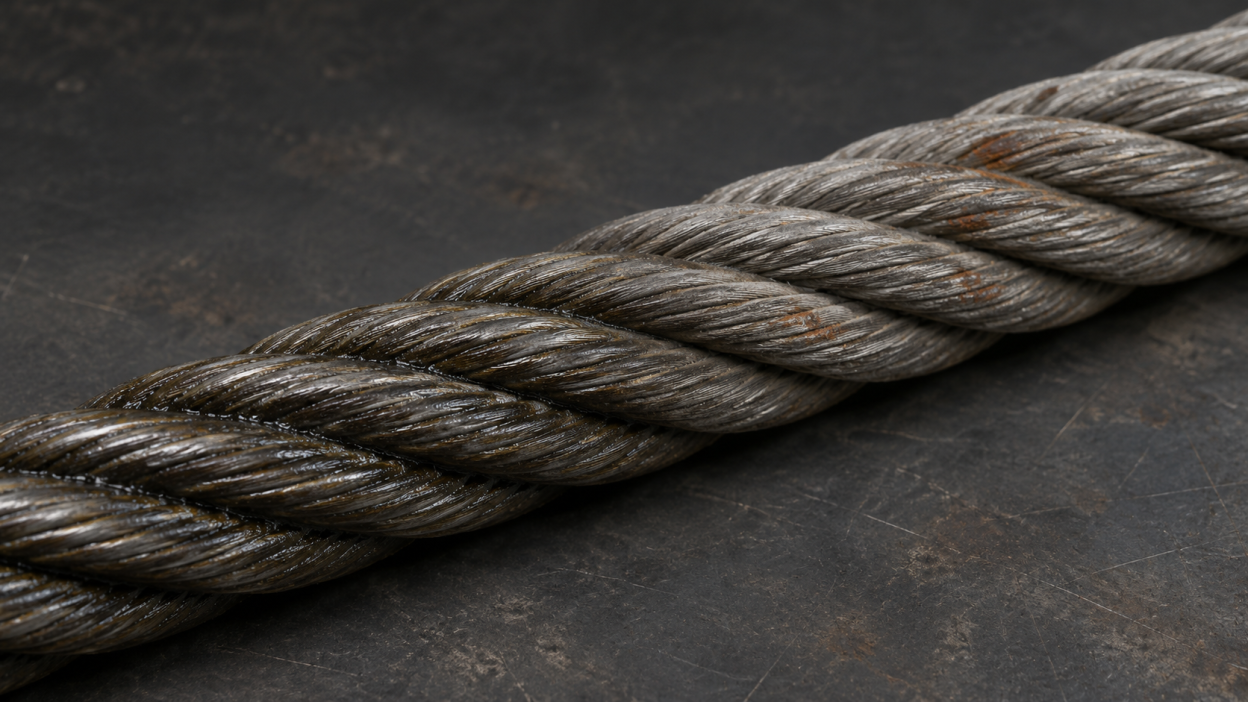
Wire ropes are widely used in lifting equipment, cranes, winches, industrial machinery, and material-handling systems where strength and reliability are essential. However, continuous movement, friction, moisture, and exposure to harsh working conditions can gradually affect their condition. Applying a suitable wire rope lubricant helps protect individual wires, reduce friction between moving components, and minimise corrosion. Over time, though, the protective coating can deteriorate or become contaminated. Recognising when lubrication has worn off is important for maintaining equipment performance, preventing premature damage, and supporting safe operation.
Why Lubrication Is Essential for Wire Rope Performance
Wire ropes consist of multiple strands containing individual steel wires twisted around a central core. During operation, these components move slightly against one another as the rope bends around sheaves, passes over drums, or carries suspended loads.
Without adequate lubrication, friction between internal wires can increase, contributing to wear and fatigue. External surfaces also become more vulnerable to moisture and corrosion.
Proper lubrication provides several important benefits:
- Reduces friction between individual wires and strands.
- Helps protect steel surfaces against moisture and corrosion.
- Supports smoother movement around pulleys and sheaves.
- Minimises abrasive wear during repeated bending.
- Helps extend the rope’s useful service life.
However, lubrication needs to be monitored because normal operating conditions gradually reduce its effectiveness.
Visible Signs That Wire Rope Lubrication Has Worn Off
One of the easiest ways to identify lubrication problems is through regular visual inspection. Changes in surface appearance can indicate that the protective coating is no longer providing adequate coverage.
1. Dry or Dull-Looking Steel Wires
A properly lubricated wire rope generally has a visible protective film across its external surface. When this coating wears away, the steel may begin to look dry, dull, or unusually bright.
These changes can indicate that friction and direct metal-to-metal contact are increasing.
However, appearance alone cannot confirm the condition of internal lubrication. A rope may look adequately coated while still experiencing insufficient protection between its strands.
2. Surface Rust or Corrosion Spots
Rust is another warning sign that deserves attention. When protective lubrication becomes depleted, moisture and oxygen can reach exposed steel surfaces more easily.
Small reddish-brown spots, discolouration, or corrosion around individual wires may indicate that the rope’s protective condition has deteriorated.
Corrosion should never be ignored because it can reduce wire strength and contribute to fatigue-related failures.
3. Accumulation of Dirt and Abrasive Contaminants
Wire ropes operating in construction sites, mining environments, ports, and manufacturing facilities frequently encounter dust, sand, and industrial debris.
Over time, these particles can combine with existing lubricant and create a contaminated surface layer. This mixture may increase abrasion rather than provide effective protection.
Excessive dirt accumulation can also make it difficult to determine whether the rope has adequate lubrication.
Operational Changes That May Indicate Lubrication Problems
Not every lubrication issue is immediately visible. Sometimes, changes in equipment behaviour provide additional clues.
Increased Friction During Movement
A wire rope that is not adequately lubricated may experience greater resistance as it moves over sheaves and drums.
Operators may notice rougher movement, increased mechanical noise, or changes in the way the rope travels through the system.
These symptoms can also result from alignment problems, damaged sheaves, or other mechanical faults, so a complete inspection is necessary.
Unusual Noise During Operation
Squeaking, grinding, or irregular friction noises may indicate excessive contact between moving rope components or problems elsewhere in the lifting system.
When these sounds appear alongside dry surfaces or corrosion, lubrication condition should be investigated.
Visible Wear Around Bending Points
Areas that repeatedly bend around sheaves and drums experience considerable mechanical stress. Lubricant can gradually become displaced from these contact zones.
Pay particular attention to sections that experience frequent movement, as they may require more regular inspection than stationary portions of the rope.
Factors That Cause Lubrication to Deteriorate Faster
Several operating conditions can shorten the effective life of a lubricant coating.
Exposure to Water and Harsh Weather
Rain, humidity, salt air, and repeated washing can affect lubricant performance, depending on its formulation and water resistance.
Marine environments and outdoor installations often require products specifically designed to provide protection under demanding conditions.
Heavy Loads and Repeated Bending
Frequent lifting cycles and repeated bending can gradually displace lubricant from contact surfaces. Equipment operating continuously may therefore require more frequent condition assessments.
Heat and Industrial Contamination
High operating temperatures can affect lubricant consistency and accelerate deterioration. Dust, chemicals, and other contaminants may further reduce its protective properties.
Choosing a lubricant compatible with the operating environment is essential for maintaining consistent protection.
How to Maintain Proper Wire Rope Lubrication
A structured maintenance routine helps identify lubrication problems before they contribute to more serious deterioration.
- Inspect regularly: Examine accessible rope sections for dryness, rust, broken wires, deformation, and contamination.
- Follow manufacturer guidance: Use lubrication intervals recommended for the specific rope construction and operating conditions.
- Select compatible products: Ensure the lubricant is suitable for the rope material, environment, and application.
- Clean contaminated surfaces: Remove excessive dirt and unsuitable old lubricant using approved procedures before reapplication.
- Document maintenance: Record inspections, lubrication activities, and any changes in rope condition.
Importantly, lubricant should never be used to disguise damage. Ropes showing broken wires, significant corrosion, deformation, or other rejection criteria must be assessed by a qualified person according to applicable standards and manufacturer recommendations.
Final Thoughts
Wire rope lubrication gradually deteriorates through friction, repeated bending, environmental exposure, and contamination. Dry-looking wires, corrosion spots, dirt accumulation, and unusual operating behaviour can all indicate that protective coverage needs attention.
Regular inspections and appropriate maintenance practices help identify these warning signs early. By monitoring lubrication condition and following manufacturer recommendations, equipment operators can reduce unnecessary wear, support reliable performance, and maintain safer working conditions.